
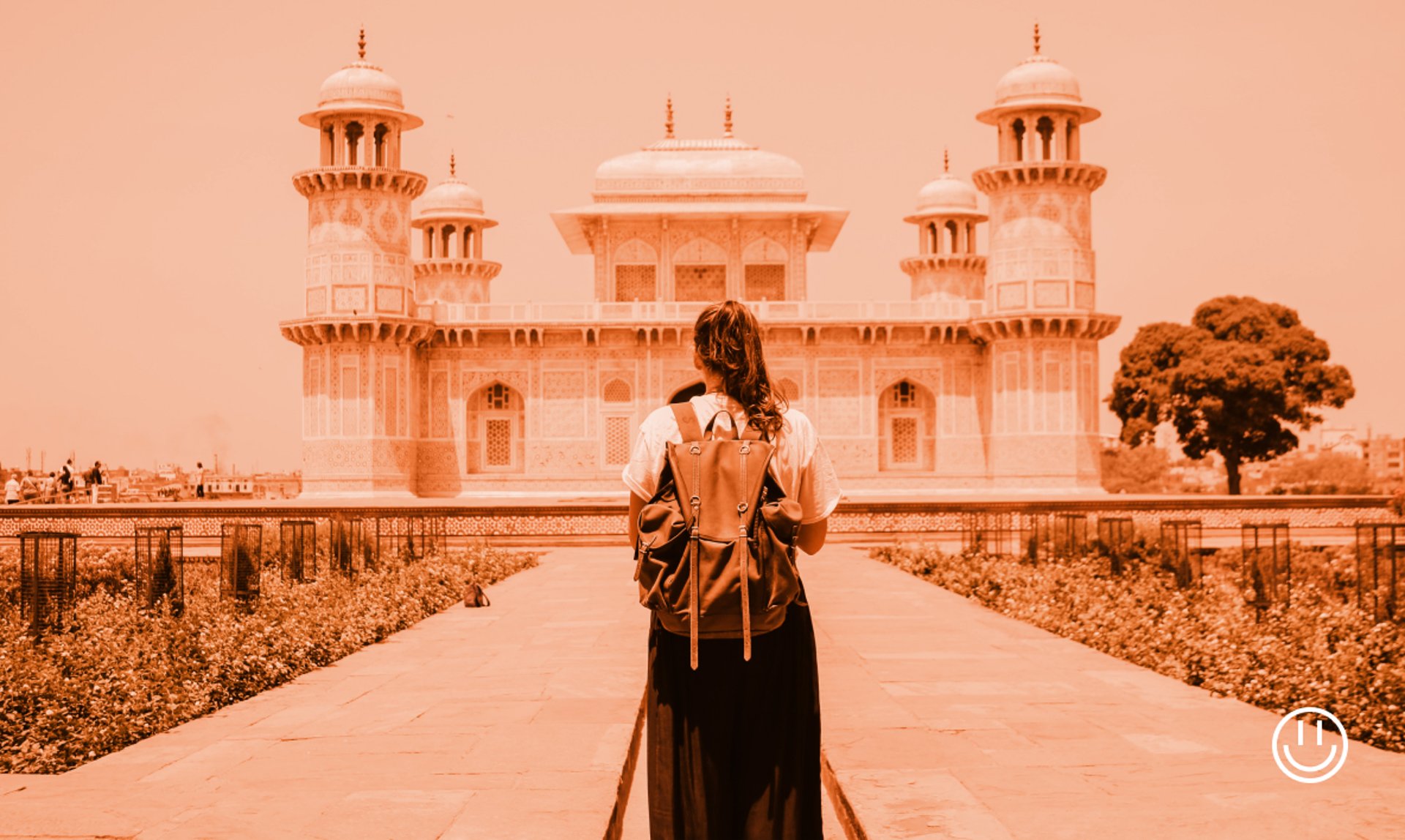
Humanity in Motion
💌 Letter from Melilla
By A. M., from the Temporary Immigrant Detention Center (CETI), Melilla
Melilla, Spain – For six months now, I've been looking at the sea from behind the fence. From here, the horizon seems closer, but life seems farther away.
We crossed deserts, slept in the mountains, and now we wait… we don't really know for what. Some days a list of names arrives; they're called and they leave. Other days, only silence arrives.
At the center, we're from everywhere: Mali, Cameroon, Sudan, Syria. We share stories and pieces of bread. Sometimes we laugh, as if all this didn't hurt so much. A fellow detainee says that “the border isn't on the map, it's in the minds of those who don't want to see us.”
I dream of working, sending money to my mother, and studying something. I'm not asking for much: just a chance to start over. Every afternoon, as the sun sets over the sea, I think that the world has to be bigger than this fence.
To those reading these words from the other side: don't forget that we are people. Not numbers, files, or news stories.
We are lives in motion, searching for a place to belong, not just pass through.
With hope,
A. M.
Melilla, Spain
💌 Letter from Tapachula
By L. J., from the “Casa de la Esperanza” shelter, Tapachula, Mexico
Tapachula, Mexico – The heat here is relentless, but what weighs most heavily is not the sun, but the waiting.
I arrived from Venezuela four months ago. I left with my young daughter, leaving behind my home, my friends, my memories. I only brought what fit in a backpack and the faith that somewhere else we could start over.
On Mexico’s southern border, there are thousands like us: Haitians, Hondurans, Nicaraguans, Colombians. We sleep in shelters, in plazas, or wherever we can. We all share the same dream: to cross, to move forward, to keep searching for a place worth staying.
Every morning, I watch my daughter play with other children and I think that they no longer understand borders. They share bread, language, games, even though they come from different countries. I wish the world could learn from them.
Sometimes, I write to friends who have managed to go further. Some are in Spain, others in the United States. They tell me that there are borders there too, even if they aren't always visible. But there are also helping hands, good people who offer assistance without asking where we come from.
I don't know how much longer we'll have to wait, but in the meantime, we keep walking with hope.
Because when you've left everything behind, you can only move forward.
With love and resilience,
L. J.
Tapachula, Mexico


🌐 Humanity in Motion
Humanity in Motion: Real stories of immigrants around the world, "The Journey" Series: before, during, and after migrating, "Letters from the Border," Immigrant Heroes (doctors, artists, farmers, workers), Poetic and illustrated pieces
Downloadable resources for NGOs, schools, and libraries
📜 "Every migrant story is a lesson in humanity."
Humanity in Motion is an educational and artistic platform that offers downloadable materials to promote understanding, empathy, and inclusion in classrooms, libraries, social organizations, and communities.
Each document, story, or creative piece has been developed with the purpose of educating, inspiring, and transforming perspectives on migration.
💌 Letters from the Border
Intimate testimonies written by migrants from transit points, shelters, or new countries.
Each letter reveals emotions, fears, hope, and humanity.
🗂️ Format: Downloadable PDF with illustrations and translation into several languages.
🎯 Recommended use: classroom discussions, presentations, book clubs.
A space for real voices, where borders become words.
From the paths of Europe, Africa, and Latin America, stories arrive, written amidst distance, nostalgia, and hope. Letters from the Border collects authentic testimonies from people who experience the migratory journey, who accompany those crossing, or who work every day defending human rights.
Here, each letter offers a different perspective: a mother writing from a shelter, a volunteer narrating life in a border camp, a young person dreaming of reuniting with their family, a journalist recounting what they saw on the other side of the wall.
✉️ Send your letter.
If you also have a story to tell, send us your testimony, reflection, or message from anywhere in the world.
We want to hear from you, and we want the world to hear from you too.
📮 Email address:
📍 We publish new letters every week.
🧭 “The Journey” Series: Before, During, and After Migration
A collection of testimonies, stories, and visual resources that illustrate the three stages of the migration journey:
Before: the reasons, dreams, and decisions that drive people to leave home.
During: the challenges, resilience, and the search for dignity along the way.
After: rebuilding, adapting, and contributing to new communities.
🗂️ Format: stories, photographs, educational infographics.
🎯 Recommended use: school workshops, community talks, intercultural projects.
“Yara’s Backpack”
Yara was 19 years old when she left her hometown in Honduras.
In her backpack, she carried three changes of clothes, a sketchbook, and a crumpled photo of her grandmother. It didn’t seem like much, but it was all she could carry.
Her journey took her along endless roads, through makeshift shelters, and through nights where fear mingled with exhaustion. “The hardest part wasn’t walking,” she says, “but not knowing what awaited me on the other side.”
Today, in Madrid, Yara is studying nursing while working as a caregiver for the elderly. She dreams of giving back the help she herself received on her journey. “My backpack is now filled with something more: stories, friends, and the certainty that I’m not alone.”
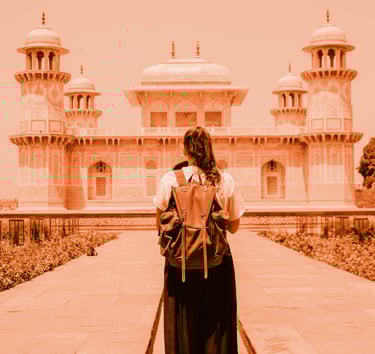

“Yara crossed borders with a light backpack and a heart full of hope. Today, from Madrid, she is transforming her journey into a future of solidarity.”
“Samir’s Bread”
Samir owned a bakery in Aleppo, Syria. The war forced him to leave behind his oven, his customers, and the house where he was born. “The only thing I wanted to save were my father’s recipes,” he says.
After a difficult journey, he arrived in Spain as an asylum seeker. In a small neighborhood shop, he fired up his oven again. The bread he bakes now has a different flavor: the flavor of resilience and shared hope.
“Each loaf is my way of saying: I’m still here, and my story didn’t end with the war.”
“Samir left his bakery in Aleppo fleeing the war. Today, in Spain, every loaf he bakes is a message of resistance and hope.”
True stories
Immigrant Heroes
Real stories of immigrant doctors, artists, farmers, scientists, workers, and entrepreneurs who are transforming their communities through hard work and talent.
🗂️ Format: Biographical fact sheets and educational posters.
🎯 Recommended use: Libraries, school murals, awareness campaigns.
From Kyiv, Ukraine to Madrid: Anastasia's Story
Anastasia: Between Two Wars and a New Future in Madrid. A testament to resilience, adaptation, and community.
“I never dreamed of being an immigrant; I dreamed of being a doctor. The war brought me to Madrid with my mother. Today I study to save lives, and I remember every day that immigrants are not criminals: we are human beings with stories and dreams.”
“I didn't dream of being an immigrant. I dreamed of being a doctor.”
My name is Anastasia, I'm 30 years old, and I'm a medical student. I was born in Ukraine, into a family with two origins: my father was Ukrainian and my mother Russian. For me, that mix was never a conflict; on the contrary, at home I learned that love knows no borders or flags.
The war took my father from me at the front and forced me to flee with my mother to Spain. Madrid is now our home, although I still feel like I'm living in a parenthesis of my life. I came at the beginning of the war, with my medical notes in my suitcase and the hope of finishing my studies here.
I want to speak out because I believe no human being dreams of becoming an immigrant. No one leaves behind their memories, their streets, their loved ones, on a whim. We leave out of necessity, for survival, for the love of life.
I've seen it firsthand in Spain: immigrants are an active part of society. We are doctors, students, workers, mothers, and fathers. We contribute to the economic, cultural, and human growth of this country, of Europe, and of the world. Migration is not a threat; it is a reality that enriches us.
Most Spaniards have warmly and compassionately extended a helping hand to me. Of course, there are exceptions, especially in political speeches that try to sow fear or division. But my experience tells me that hospitality prevails.
That's why I want to ask for something very simple: don't criminalize immigrants. Humanize them. Behind every migration story there is pain, but also hope. I myself never imagined that I would be a refugee, that I would study to become a doctor in a country that isn't my own.
Today I live with my mother, building a new life without my father, but with the strength of his memory. And from here I raise my voice: let's not forget that Ukrainians and Russians, beyond politics and war, are families. What separates us is minimal compared to what unites us: the desire to live, love, and move forward together.
My dream remains the same: to heal, to save lives, to build bridges instead of walls.
And that dream has no nationality.
“I never planned to be an immigrant. I sought life where life opened a door for me: in Sweden. Being an immigrant doesn't erase my identity, it expands it.”
“I never thought I would trade the Andalusian sun for Swedish snow.”
My name is Javier, I'm 34 years old, and I'm from Granada. Six years ago, I decided to leave Spain for Sweden. I didn't leave because I wanted to abandon my country; I left because I wanted opportunities that I couldn't find at home. I finished my degree in Computer Engineering and, after months of unsuccessful interviews in Spain, I received a job offer in Stockholm.
At first, the adjustment was tough: the language, the culture, the loneliness. Arriving in a country where winter seems endless and the days are so short made me feel isolated. But I also discovered another way of living: respect for personal time, trust in community, the value of silence.
Today, I work for an international technology company. I pay my taxes in Sweden, I speak Swedish with my colleagues, and little by little, I've built a circle of friends from many countries. Sometimes people ask me, “What’s it like to be an immigrant?” And I answer, “Nobody plans it; you simply seek life wherever life opens a door.”
I know that in Spain, there’s often debate about immigrants arriving. But the truth is that hundreds of thousands of Spaniards are also immigrants beyond our borders. We are part of the economic and social fabric of other countries, just as immigrants are part of ours.
I want to make something clear: being an immigrant doesn’t take away our identity; it expands it. I’m still Spanish, I still dream of the Alhambra and the aroma of coffee in Plaza Nueva. But I’m also a little bit Swedish now, because this country has given me a future I thought was lost.
That’s why I say, with a firm voice: migration is human, and we all share it.




Research: The economic contribution of immigration in Spain and Europe
Investigative journalism report on the positive effects of immigration on the Spanish and European economies.
Includes data, analysis, citations from reliable sources, and practical recommendations for public policy and the magazine's narrative. Key sources are indicated after the sections with the most important findings (the five most heavily criticized claims are cited).
Research: The Economic Contribution of Immigration in Spain and Europe
By: Todos Somos Inmigrantes – TSIMAG / We Are All Immigrants – WAAIMAG
Contrary to narratives that portray it as a structural problem, immigration has been a key driver of recent economic growth in Spain and has clearly positive effects on many European economies: filling labor gaps, supporting Social Security, and boosting entrepreneurship. But these benefits only materialize fully if labor market integration and public policies accompany the arrival of immigrants. National Institute of Statistics
1) What do the numbers say — an overview?
Spain has experienced an extraordinary influx of net migrants in recent years, with significant positive migration figures (for example, a net increase of 642,296 people in 2023 according to the National Statistics Institute). This has impacted the country's demographics and labor force.
National Statistics Institute
More than 3 million foreign workers registered with Social Security: In 2025, Spain surpassed 3.07 million foreign workers registered with Social Security for the first time, representing a significant proportion of recent net job creation (42% of new jobs in 2024). This demonstrates that migrant labor has been crucial to the recovery and expansion of the labor market. El País
At the OECD/European level, studies point to fiscal and labor effects that are, on average, neutral or positive in the medium term, especially when migrants enter the workforce and remain employed. Evidence indicates that immigrants contribute more in taxes and social security contributions than they consume in benefits, on average, once integrated. OECD +1
2) Specific Channels of Positive Impact
a) Labor Market and Employment
They complement the workforce: they fill positions where there is a labor shortage (construction, hospitality, agriculture, elder care, healthcare, and in some cases, technology), reducing production bottlenecks. In 2024-25, a significant portion of the jobs created were filled by foreign workers. El País +1
b) Sustainability of the Welfare System
Contributions to social security and sustainability: countries with aging populations (including Spain) require net inflows of workers to support pensions and services; organizations such as the Bank of Spain and the European Commission have highlighted the need for orderly flows of foreign labor to maintain the system. Bank of Spain +1
c) Entrepreneurship and Productivity
Growth of migrant entrepreneurship: there are millions of migrant entrepreneurs in the OECD; they represent a significant proportion of self-employment and help create local businesses and jobs. Migrant entrepreneurship drives innovation in specialized sectors and revitalizes rural or aging areas. OECD +1
d) Demographics and Aggregate Demand
Positive demographic effect: Immigration mitigates the decline in the working-age population, sustaining demand for housing, consumption, and services, which in turn stimulates local and fiscal activity. Recent macroeconomic reports and analyses (CEPR/IMF) underscore that migration can boost potential output if migrants integrate into the workforce. CEPR +1
3) Recent Evidence: Spain as a Case Study
Spain experienced significant economic growth and strong job creation in 2023–2024, where immigration was a key factor in filling labor shortages and sustaining key sectors (hospitality, construction, services). The rate of new job registrations and the increase in foreign employment demonstrate that migrants are not passive consumers of the system, but rather active economic agents. El País +1
4) Nuances and Risks: Why the Benefits Aren't Automatic
Labor Segmentation: Many immigrants hold precarious or low-skilled jobs; their economic contribution exists, but the lack of labor mobility and recognition of qualifications reduces their long-term potential contribution. El País
Initial Integration Costs: The massive arrival of refugees can entail temporary fiscal costs (housing, health, education), although the literature indicates that in the medium and long term these costs are offset if migrants find employment. CEPR
Policy and Public Narrative: Social acceptance and integration policies determine how quickly immigration translates into a net economic advantage. Polarized discourse and administrative hurdles reduce the effectiveness of this policy. IMF
5) Policy Recommendations (Brief Practical Guide)
Streamline the recognition of qualifications and accreditations to enable foreign doctors, engineers, and technicians to work in positions related to their training. This multiplies added value.
Specific active employment policies: training, language courses, validation of experience, and "migrant-to-work" programs in sectors with shortages.
Support for migrant entrepreneurship: microloans, incubators, and advisory programs for self-employed foreigners.
Data-driven public communication: campaigns that explain the tax and labor contributions of immigrants to counter misinformation.
Demographic planning: integrate migration into medium-term policies (housing, care, education) to maximize the positive impact.
These measures increase the likelihood that migration will translate into GDP growth, fiscal sustainability, and social cohesion. OECD +1
6) Journalistic Conclusion
Immigration is neither an automatic cost nor an economic “threat”: when managed well, it is a structural opportunity to address aging populations, fill critical jobs, boost entrepreneurship, and sustain domestic demand. Challenges exist (labor market segmentation, initial costs, political narratives), but empirical evidence shows that countries that integrate migrants see real and sustainable economic benefits. Spain, due to its recent dynamics, is a case study that confirms the transformative potential of migration. El País +1
Main Sources (read and verified)
National Institute of Statistics (INE) — Migration and Change of Residence Statistics (EMCR / CPS).
National Institute of Statistics +1
El País — “Spain surpasses three million foreign workers for the first time…” (June 2025). El País
OECD — International Migration Outlook 2024 and section on the economic impact of migration. OECD +1
Bank of Spain — interventions and macroeconomic analysis on recent migration flows (2024–2025). Bank of Spain +1
IMF/CEPR — documents on the macroeconomic implications of migration in the EU and fiscal impact estimates. IMF +1
Methodological Notes (Transparency)
This report synthesizes recent official reports and journalistic analyses (INE, OECD, Bank of Spain, IMF/CEPR, and the financial press). Figures may be updated quarterly; the conclusions emphasize the robust trends shown by multiple sources.
On fiscal matters and the net impact on GDP, the literature offers ranges and conditions (e.g., neutral to slightly positive effects in the long term), so the figures should be read in their context (age composition, skills, length of stay, integration policies).
Immigrants don't take jobs away from Spaniards; rather, they fill jobs that aren't in demand locally, and many even arrive with high qualifications.
“Who fills what?”
Title: Immigrants don't take jobs: they complement them
Body: 65% of immigrants in Spain work in sectors with labor shortages: agriculture, construction, care work, and hospitality. In these sectors, national hiring is insufficient.
Immigrants sustain strategic sectors → without them, there would be a shortage of services and rising prices.
Silhouettes of workers in agriculture, hospitals, construction, and restaurants.
“Invisible Talent”
Title: Many immigrants are qualified, but they accept jobs that others reject
Body: Thousands of immigrants hold university degrees (doctors, engineers, teachers).
🌍 Humanity in Motion
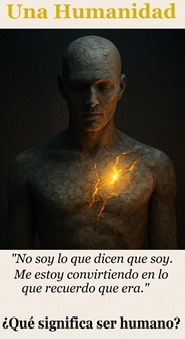
For One Humanity
There is no distant land,
only paths that intersect.
There are no true borders,
only lines in the dust of fear.
We walk—all of us—
with history on our backs
and a dream in our eyes.
Some carry a homeland,
others seek one.
We all carry a name,
a language of the soul.
🎨 Poetic and Illustrated Pieces
A collection of poems, illustrations, and visual fragments that express the beauty, pain, and hope of the human journey.
Each piece is accompanied by a brief reflection and a guide for classroom use.
🗂️ Format: Downloadable art booklet (PDF).
🎯 Recommended use: Art classes, literature classes, cultural integration activities.
🤝 General Objective
To promote emotional, critical, and compassionate education about migration, offering free tools that strengthen the work of:
Schools and universities.
NGOs and social foundations.
Public and community libraries.
Activists, mediators, and intercultural educators.
Humanity in motion,
waves that never stop,
hands sowing the future
in the land of others.
We don't come to take,
we come to share.
We don't ask for pity,
we ask for understanding.
Because migrating
is another way of saying:
“I want to live.”
And as long as the wind changes,
as long as the sun rises,
we will continue to be — one —
One Humanity.
💡 Website suggestion (below the poem):
✍️ Do you have a poem, story, or drawing about migration, identity, or hope?
Send it to ssinmortalife@gmail.com to participate in the “Humanity in Motion 2025” International Contest.
The best works will be published and presented at a cultural event at the end of the year.
🌐 Humanity in Motion
ABOUT US | OPINION | COURSES | JOBS | SHOP | CULTURE | COOKING | TRAVEL | BOOKS | CONNECT | PEOPLE & IMAGES | INTERVIEWS | TRANSPARENCY| ADVERTISING
Do you like what you see?
Subscribe to the TSIMAG | WAAIMAG newsletter to stay up-to-date with our latest news.
By registering, you agree to our privacy policy and terms of use, and to receive messages from TSIMAG/WAAIMAG and our partners.
ASOCIACIÓN SSI-INMORTALIFE | CIF: G02765360 | Calle San Román del Valle, 2, Bajo D, 28037 Madrid | Tel: +34 650 48 3084 | ssinmortalife@gmail.com
Contact | Legal Notice | Privacy Policy | Cookies | Subscriptions | Companies | RSS Newsletters | Projects | Giveaways | Sports | Weather | Latest News
Published in Madrid by the SSI-Inmortalife Association. Bilingual digital magazine published by TSIMAG / WAAIMAG. First edition – November 2025
© 2025 ASOCIACIÓN SSI-INMORTALIFE. Madrid, Spain. All rights reserved.